
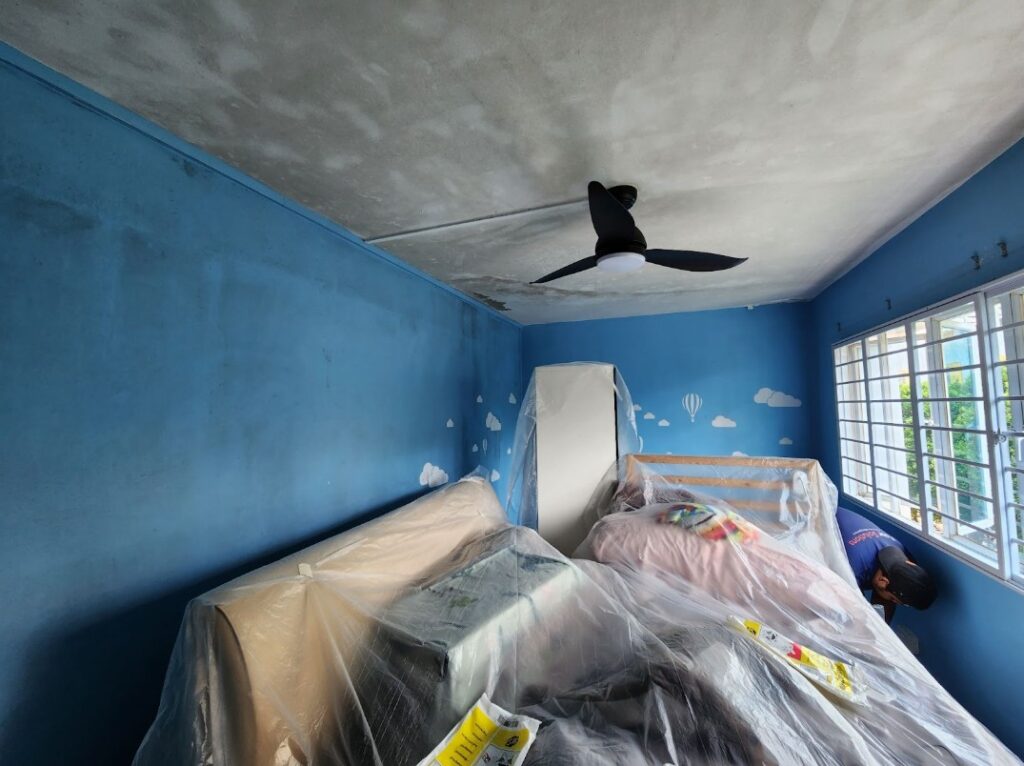
When it comes to painting your property, most people focus on colour, finish, and price. But in humid climates like Singapore, mold resistance should be a top priority — especially in bathrooms, kitchens, and poorly ventilated areas.
So what’s the difference between anti-mold paint and regular paint? And is it worth the investment?
Paint can mask a mould problem, but it will not fix the cause, which is why homeowners often turn to mould removal in Singapore that treats the growth at its source.
In this article, we break down the benefits of anti-mold paint and why it can save you time, money, and health issues down the line.

🔍 What Is Anti-Mold Paint?
Anti-mold (or mould-resistant) paint is specially formulated with fungicides and moisture-resistant agents that prevent mold and mildew from growing on painted surfaces. It’s commonly used in high-humidity environments and areas with past mold infestations.
🎨 Regular Paint: The Basic Option
Regular paint gives you a clean look and comes in a variety of finishes and colours. However, it does not protect against mold — and may even trap moisture, creating the perfect breeding ground for fungi.

🥊 Anti-Mold vs Regular Paint: Key Differences
| Feature | Regular Paint | Anti-Mold Paint |
| Mold Protection | ❌ None | ✅ Actively prevents mold growth |
| Longevity in Humid Areas | ⏳ 1–2 years (may peel early) | 🕒 3–5+ years with proper prep |
| Health Impact | 🚨 Can allow mold regrowth | 💨 Reduces risk of respiratory irritation |
| Maintenance Cost | 💸 More frequent repainting | 💰 Less frequent, longer-lasting |
| Ideal For | Dry, well-ventilated spaces | Bathrooms, ceilings, kitchens, condos |
💡 Benefits of Using Anti-Mold Paint
1. Long-Term Protection
Anti-mold paint creates a surface that mold spores can’t easily attach to, reducing chances of regrowth even in damp environments.
2. Healthier Indoor Air Quality
Mold can trigger allergies, asthma, and sinus infections. Anti-mold paint helps protect your family, tenants, or staff by minimizing fungal presence on walls and ceilings.
3. Cost-Efficient in the Long Run
While slightly more expensive upfront, anti-mold paint can reduce the need for frequent repainting, cleaning, or costly mold remediation.
4. Increased Property Value
Homes or offices with visible mold patches can turn off potential buyers or renters. Anti-mold paint ensures a cleaner, well-maintained look that lasts.
🛠️ When Should You Use Anti-Mold Paint?
We recommend using anti-mold paint after mold remediation or if your property shows signs like:
- Peeling ceiling paint
- Musty smells
- Repeated wall stains
- High humidity or poor ventilation
It’s especially effective for:
- HDB flats
- Condominiums
- BTO bathrooms
- Office pantries
- Commercial kitchens
👷 Pro Tip from a Mold Specialist
“Many clients repaint with regular paint after a mold cleanup, only to call us again months later. Always pair mold treatment with anti-mold coating to protect your investment.”
✅ Final Verdict
Regular paint is cosmetic. Anti-mold paint is protective.
If you’re dealing with moisture issues or past mold problems, upgrading to anti-mold paint is a smart move. It keeps your space healthier, cleaner, and mold-free for longer.
Need help choosing the right paint or performing mold remediation first? Contact us today — we’ll assess your situation and recommend the best solution to keep your property protected.
Why Choose a Professional Mold Treatment in Singapore?
- We’re certified in mold removal and ULV fogging
- Use only trusted brands anti-mold coatings, nippon, dulex
- Serve HDBs, condos, and commercial toilets
- Transparent pricing & optional aftercare packages
Book Your Mold Inspection Today (Worth $50 – Waived If You Book a Service)
Let us help you stop mold for good — not just for now.
📲 WhatsApp us for a free assessment of your toilet ceiling mold, or claim our first-time customer discount on ULV fogging.
Frequently asked questions
Does anti-mould paint get rid of mould?
No. Anti-mould paint helps prevent mould from growing back on a treated surface, but it does not remove existing mould or fix the moisture causing it. Painting over live mould traps it and it returns. The mould must be removed and the moisture addressed first, then an anti-mould coating protects the finished surface.
How long does anti-mould paint last?
On a properly prepared, dry surface, a good anti-mould coating typically holds for a few years. It depends on the ongoing humidity and whether the original moisture source was fixed. Where damp persists, it will not last.
How does anti-mould paint work?
Anti-mould paint contains fungicidal additives that make the surface hostile to mould spores and slow regrowth. It is a protective layer, not a cure, so it works best after the mould is removed and the area is fully dry.
Is anti-mould paint worth it?
Yes, as the final step after proper mould removal and moisture control. On its own, over untreated mould or a damp wall, it is a short-term cover-up that fails within weeks.